
How to Invoice Your First Project
So now that you’ve landed that amaznig contract/project/client, it’s time to send an invoice.
I’m going to break down a few different types and the best way to go about organizing them based on the complexity of the project.
Remember that for your client, accounting for your time is done in great detail. So the way you create your invoice makes it easier for them to approve and/or input into their systems.
Ex. 1 Time Only
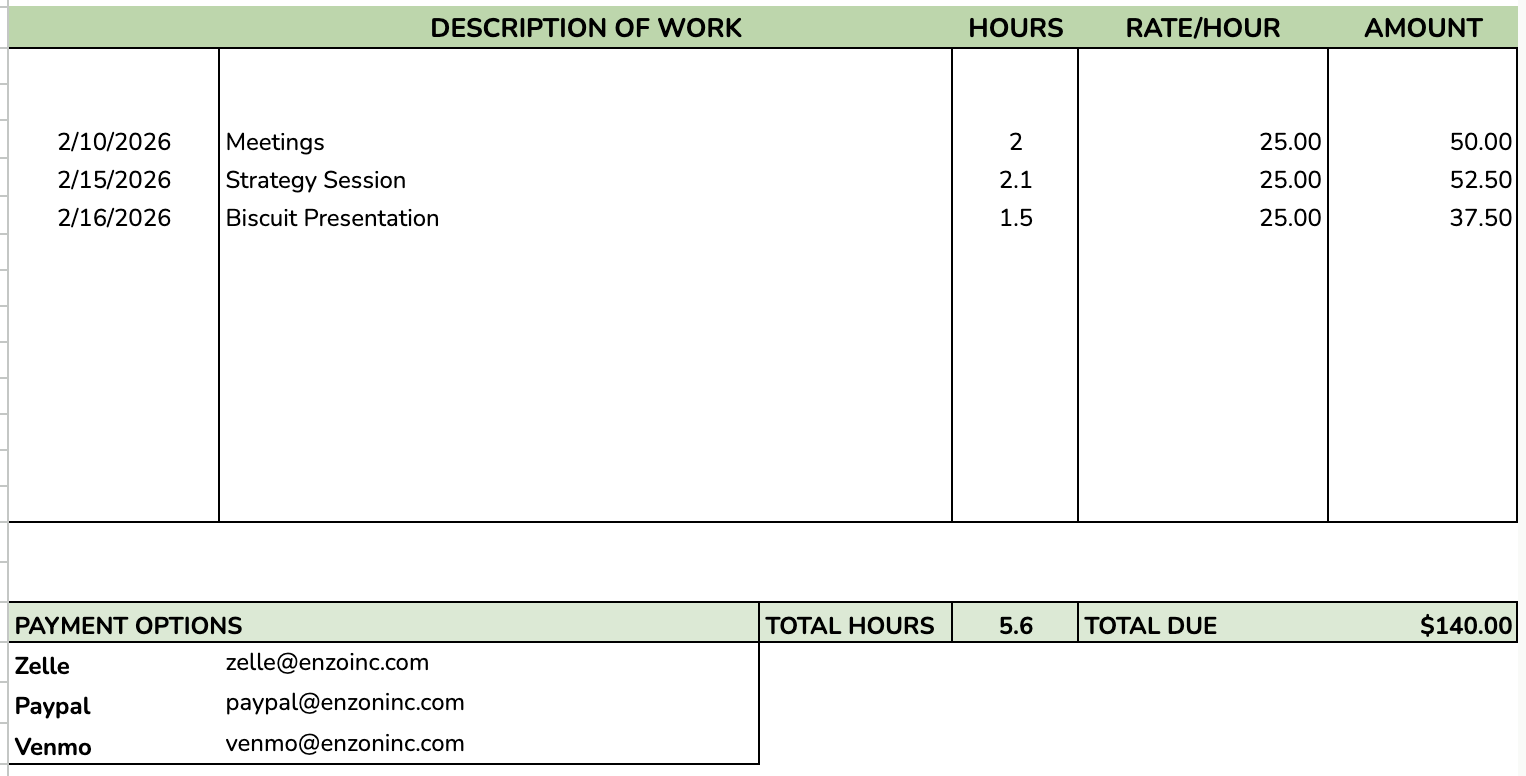
This is the simplest invoice, straightforward for billing only your time, with an hourly rate. Or, if it’s a flat rate you might just have a line item for $XXX and then break out the meeting dates (if they want it that detailed)
But in this example it’s easy to see how many hours are being billed and for what rate with a clear total.
Ex. 2 Time and Expenses + 1 Trip
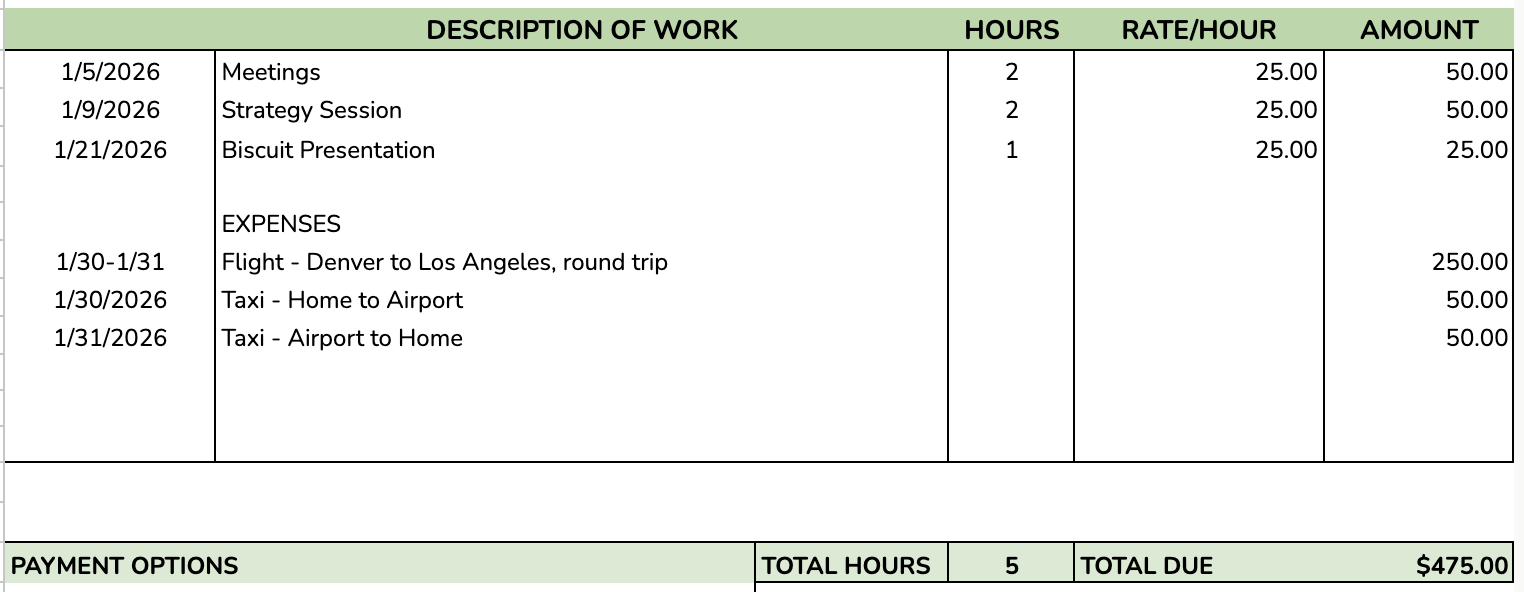
In this case, we’re billing not just for time, but for travel expenses because you traveled for a couple days.
When you have expenses, it’s a good idea to break them out separately because they won’t be treated the same as labor in most cases. But even if they are treated equally, this makes it much easier for your client to see how much was incurred for each category. Generally speaking, this format is a good way to show these costs broken out.
It’s clear that you’re charging for labor / time from 1/5-1/21 and then a trip on 1/30-1/31. Of course, include copies of the receipts with your invoice.
And to make it even cleaner, combine the receipts into 1 file with the invoice. (on a mac, you can do this in Preview). Try not to send all the receipts as different files. From a professional standpoint, sending one PDF file is clean and straightforward.
Or, at the very least send just 2 files: one with the invoice and one with all the expenses combined into one file. One of my client’s contractors sent 10 separate attachments; 1 was the invoice and the other 9 were receipts. All of it has to go into the payment system as one file, so I had to combine all the receipts with the invoice to make one PDF. This is tedious and really shouldn’t be something you expect your client to do for you.
Again, we’re trying to organize everything so it’s as easy as possible for them to pay you!
Ex. 3 Multiple Projects in One Invoice
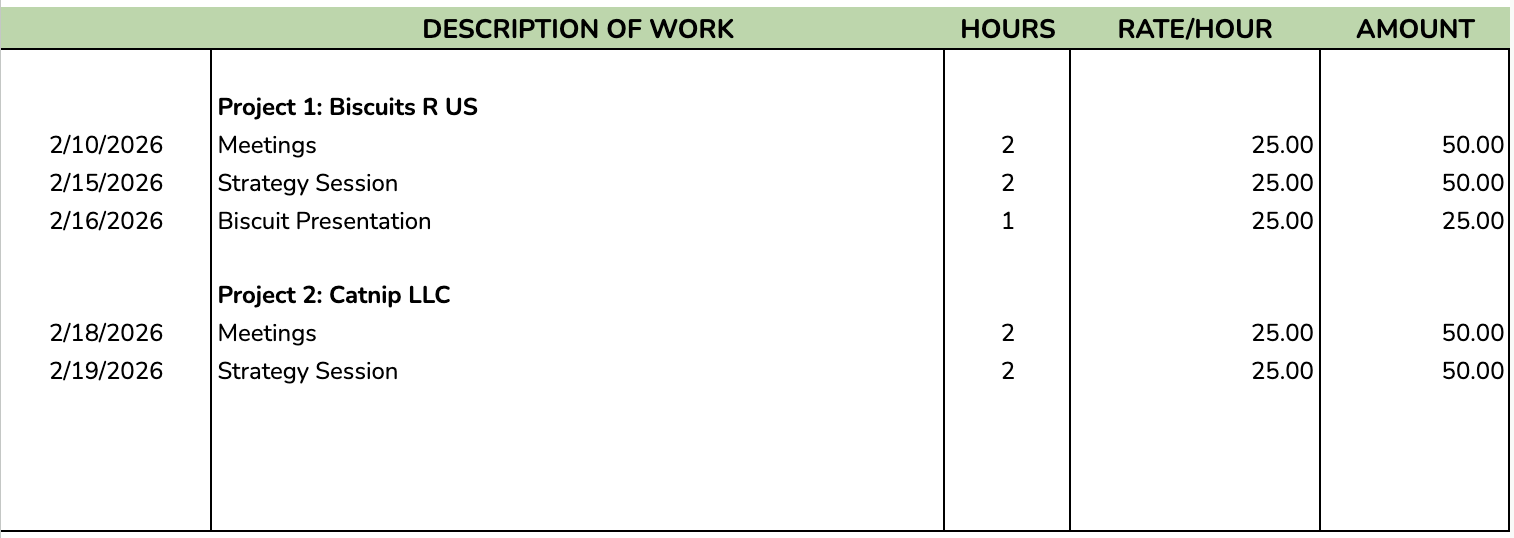
This shows 2 separate projects and each project has it’s own set of hours. Your client might want to see how much time you spent on one project vs another, Since those might have separate budgets..
So this way they can easily see 5 hours were spent on Project 1 and 4 hours on Project 2.
Also good to ask your client, do they need separate invoices for each project. If you can combine multiple projects on one invoice, this is a clean way to show exactly what you did for each one.
The same would go for events. Let’s say you travel to events, as a brand ambassador.
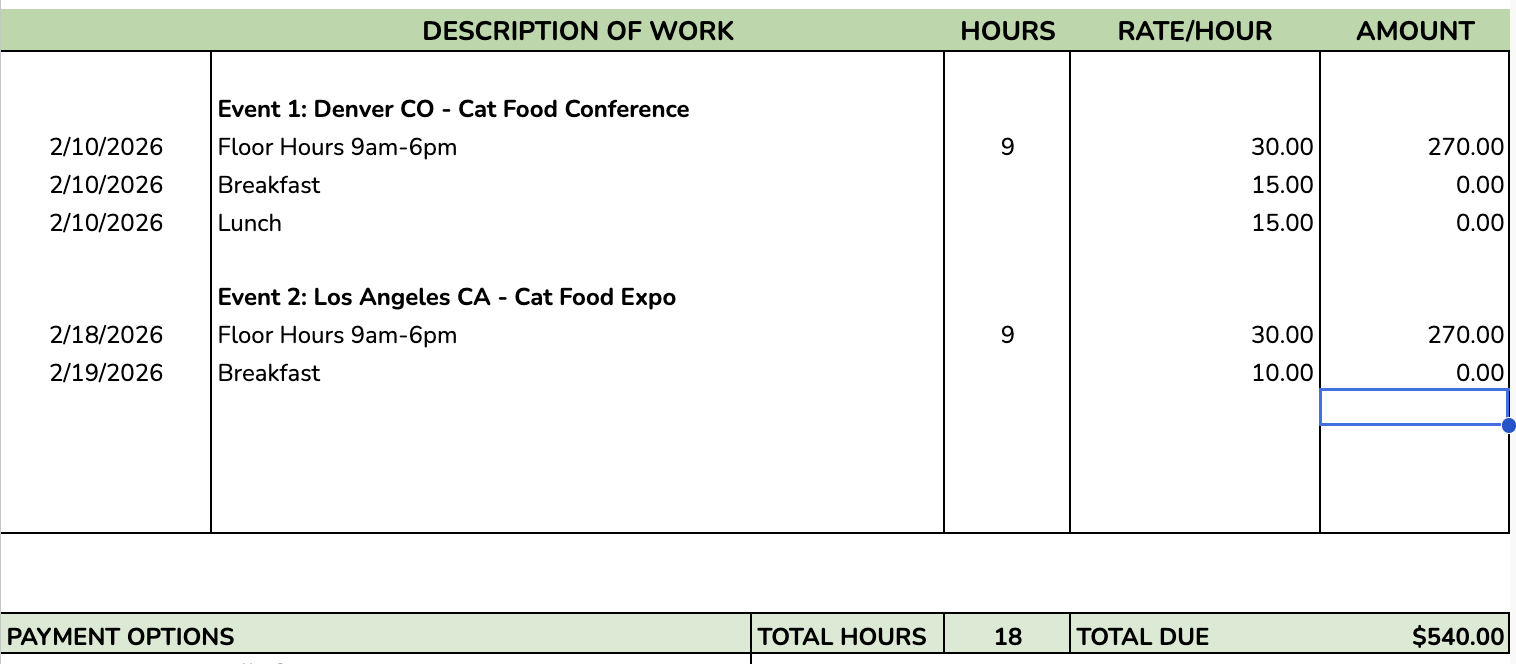
So here we have 2 events to charge for including some meals. Your hours should go first and then your expenses. Each event is treated separately, because chances are your client has different budgets for each event. Even if they don’t, it’s clear to them exactly what you’re charging for each event.
The goal is to provide details for your client so they don’t have to ask basic questions. You’ve provided enough information about exactly what the invoice is for so they don’t have to circle back to you, further delaying payment.
