
What to Include on an Invoice as Freelancer
When it comes to creating an invoice format, you may not be sure what to include — and that's completely normal. So I'm making it easy by doing it for you.
In my last post, I shared a free template you can use which will track multiple clients and invoices.
In this example, my handsome cat Enzo is a freelancer with one main client: Cat Biscuits Inc. He has no idea how to invoice anyone, so this template will make sure he includes all the relevant details.
Remember that your client / point of contact is likely not going to be the actual bookkeeper/accountant. And we financial types need FAR more details than your contact probably realizes. Having too many details for an accountant is NEVER a bad thing.
But forgetting to include certain details will only delay your deposit / check. So making sure you have all the right details ensures that you’ll get paid on time and your client gets all the info they need to pay you!
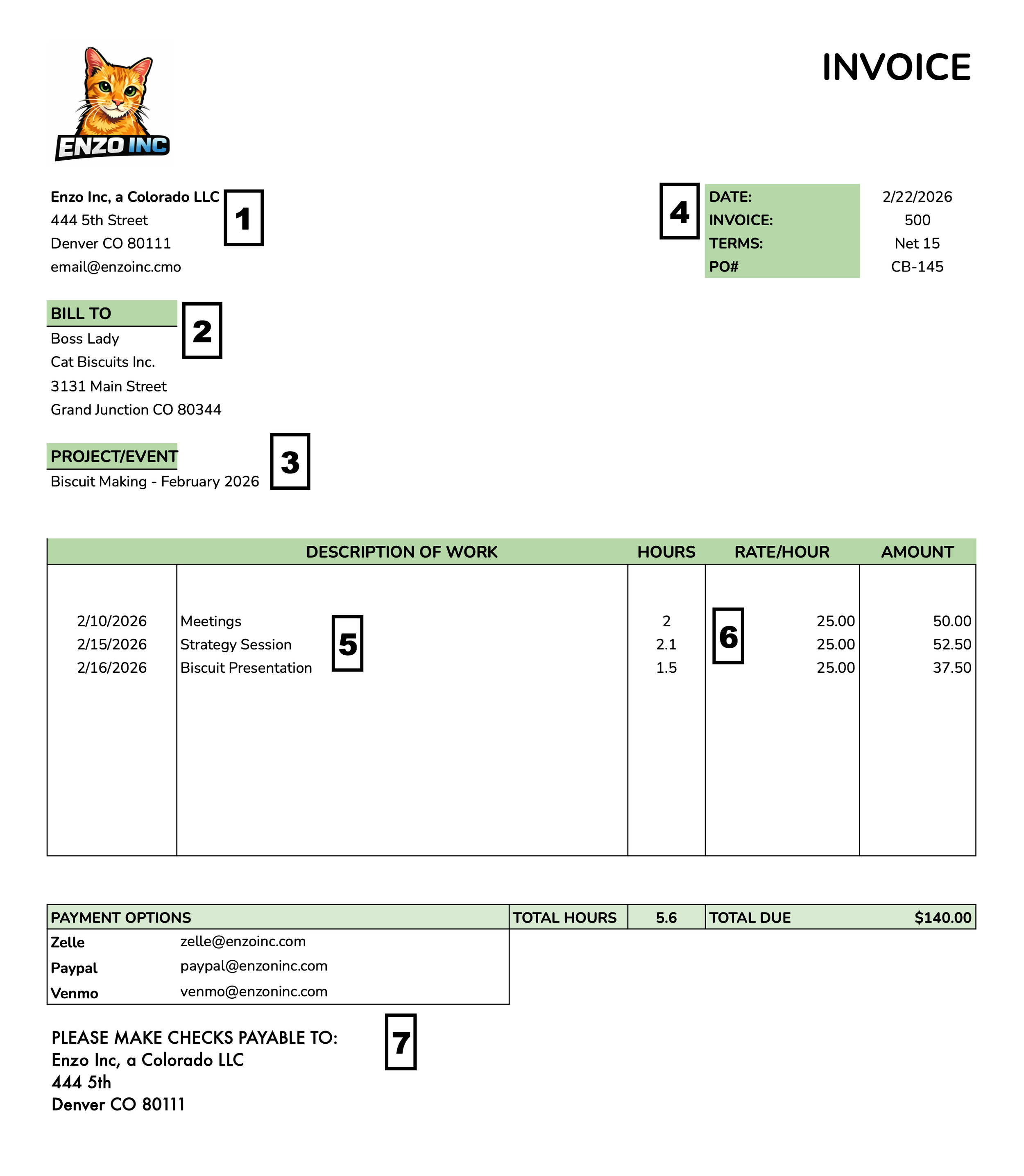
1/ Who is invoicing your client?
Either you as an individual, or your LLC / Inc
2/ Who are you billing?
The entity or individual that’s actually going to pay you.
3/ What’s the name of this Project?
In this example, Enzo’s project was for “Biscuit Making”. He has 3 other projects lined up for this client, but this invoice is specifically for this one. If you have multiple projects for the same client, it’s worth asking if you need to create a separate invoice per project.
Many of your clients will allocate resources per project, or might need to bill their clients by the project they hired you for. It’s always good to address the invoicing format when you sign your contract/agreements.
4/ Invoice date, invoice#, PO#, terms.
The date of your invoice is important because they need to know when you’re billing them for the service. Make up a number for your invoices or a code so you can remember too. I like to use different prefixes depending on the client. So Cat Biscuits Inc invoices would start with CB, “CB100”. But Dog Biscuits Inc invoices would start with DB “DB100”. The key is to make sure the invoice numbers are different every time. Also try to avoid long names like “SanFrancisco Cat Scratch Project 3-30-26”. Invoice numbers should be simple and straightforward.
A PO# can be crucial to know which budget or bucket of money your invoice needs to be paid from. POs are more prevalent in larger companies. Not everyone uses them but if you’re working for an established company they’ll likely need one. Sometimes this doubles as the Project Name.
Remember, this invoice might be forwarded to the accounting person and they likely know nothing about the project. Just that you need to be paid. And that can’t happen without these details.
5/ and 6/ Itemize Your Time / Labor / Costs
Each day Enzo spent working on the project is itemized separately, by hours x his hourly rate. Your client has to account for the time you may bill for the project vs. expenses. So let’s say you’re also billing them back for supplies for the project. You’d add those items separately after you itemize the labor:
Meeting 1
Meeting 2
Expense 1
Expense 1
Labor and expenses should always be separated, especially travel expenses. Calculations are detailed and clear so they know exactly why you’re charging the amounts you’re charging.
Hours X Hourly Rate = Amount
7/ Payment Information
This is the whole point, right? The more ways you have for them to pay you, the better. Listing everything out also makes it simple and easy for them to pay you as quickly as possible.
Enzo has 3 electronic payment options and also has the name and address clearly written for where to send a check.
Contact me for a free consult if you need help!
