
Increasing Chances of Landing an Interview
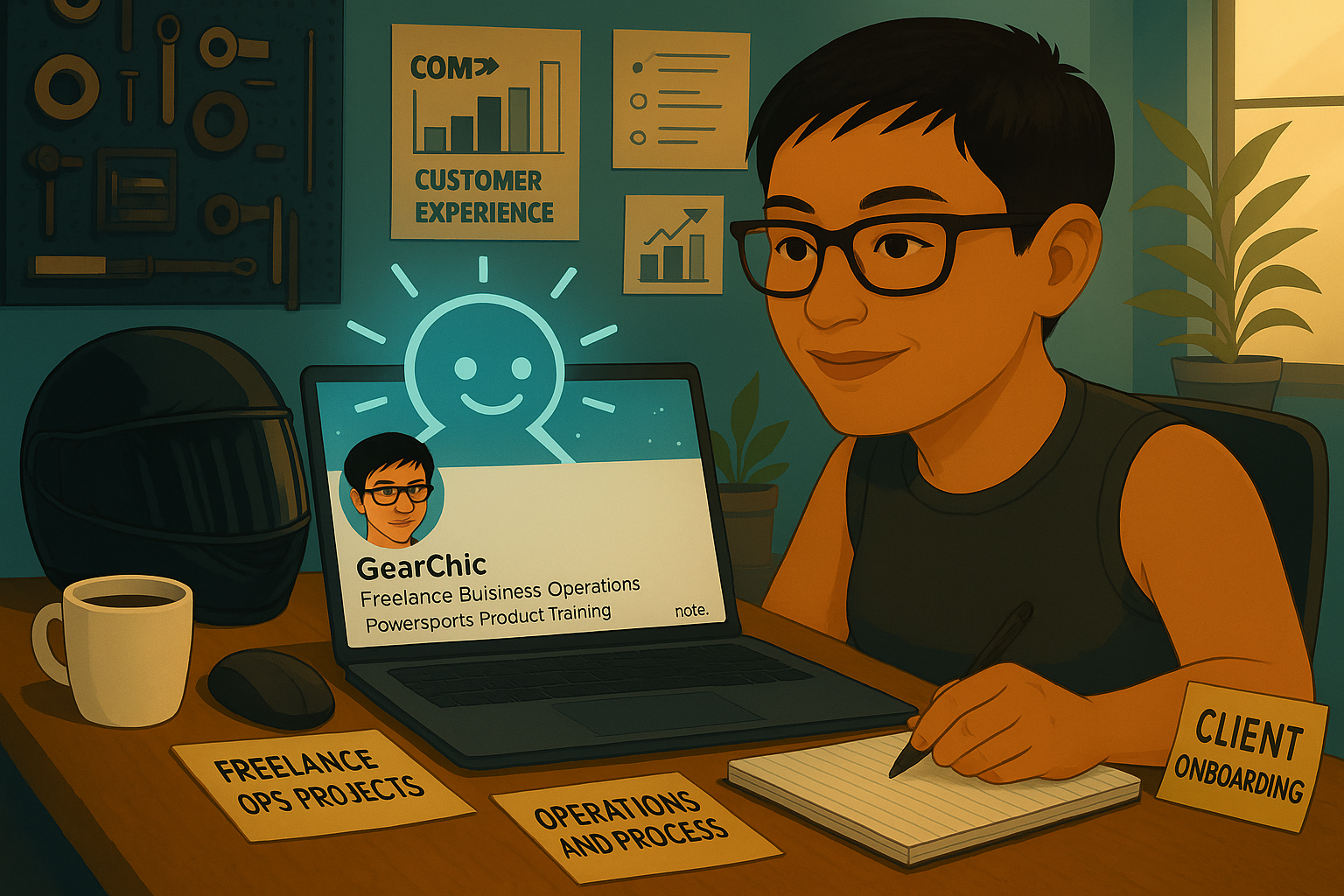
AI is an amazing tool, isn’t it?
How the heck do you get an interview these days? It's been one of the most difficult aspects of the hunt for me. I miss the good ole days when we used to jump on Craiglist, look for a job, get one in a week and then quit the existing one. I used to always (early-mid 2000s) had a job lined up, because it was so easy to do. (GenX, chime in here).
I know how hard it is right now for people to even get a real interview. So I wanted to share a list of things I did to help me because, it would make me so happy to know that some of these tips helped other job seekers.
I want to preface this post by saying that I'm NOT a job search expert and I don't have 100 interviews and dozens of offers to show for it. I haven't gotten an offer yet, but I have received about 11 solid interviews in 3 months (I had 2 scammy ones unfortunately) which was a HUGE change from my last attempt in 2024. I even got 2 final rounds twice!
I was laid off back in October of 2024. I took a month off to decompress since I knew I would be spending the next 6-8 months searching. It was awful. I only got 2-3 real interviews in 10 months. It was absolutely miserable. I searched heavily until Sept 2025 when I found a short term contract role, which ended last month. :-(
When I started my search again earlier this year, I knew I had to completely change my strategy. Relying on AI to just draft a resume and cover letter wasn't going to do it.

AI is such a blessing and a curse!
AI TOOLS
I thought about how I was using it before and how I could improve that process to create better results. I decided that I would generate the bulk of the content or write my own thoughts down with how I wanted to approach a certain job application before asking it to help. In the case of a cover letter, I would draft it in ugly grammar and then direct it to edit my words for grammar/punctuation/flow/tone. That way my personality, the real me would hopefully come through.
So I started with redoing my resumes from scratch, building a comprehensive resume with my entire work history about 25 pages long. I call this my Knowledge Doc. I structured it in a very methodical way to make it as easier for the AI tool to find the info and to make updates.
Instead of giving the AI tool a resume and then asking it to only use that to rebuild, I told it to use the knowledge doc so it had access to EVERYTHING in my history. Then I would call out specific things I wanted it to include, because I know my history better than it does even though it was able to read the document. I guess I was expecting it to identify the same things as I was...
I also used my instincts as far as what items in my knowledge doc should be represented to apply, instead of relying solely on the AI to make suggestions, because as they say, they're not always accurate ;)
I also didn't use any automatic AI applying sites. I decided I want to make sure I critiqued and read every resume and cover letter I sent. Also reading what some recruiters are going thru, to read hundreds, sometimes thousands of resumes, I just thought this might help. And what did I have to lose?
REVISED RELATIONSHIP WITH AI
As with any relationship, if something's not working, something has to change!
First, I switched to Claude (pro). You should use whatever you're comfortable with, but for me this has made a huge difference. I wasn’t used to questioning the AI tool, so this time around I would examine the resume or information it would give me and try to critique in greater detail what it was suggesting as far as resume content.
Don’t let the AI Tool lead you! Use those reigns and give it detailed directions.
Generally speaking I don't think I was taking the reins, so to speak. I kind of let it lead me in the resume process. I wasn't correcting it or giving it enough direction (often too vague)
If I felt a specific project/achievement was crucial to the job, I would tell it add it before it generated anything. I wasn’t following my instincts as much as I should have, calling out what I wanted to highlight for each role, disagreeing with its’s suggestions more often and going with what I personally wanted to do. I know this seems obvious but, for me it wasn’t until recently.
MY STORY
This was probably the most important thing I changed and improved.
I've held a career in Powersports for about 15 years. My other career is I'm in expert in the field of technical motorcycle apparel. If you ride onroad or a mix of on and off road, I can help you shop for motorcyle gear that fits and works because it's my expertise. Crossing out of that industry with those skills into technology, healthcare, business or any other was virtually impossible.
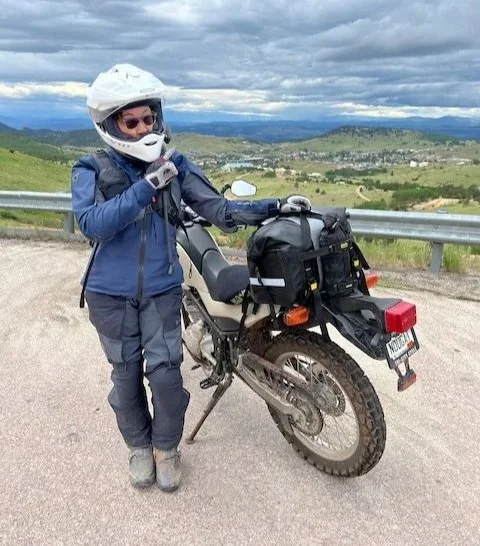
Visit my personal blog, GearChic.com for help shopping for motorcycle gear!
Trying to transition out of my industry (that's a story for another time) has been difficult, but rewarding. I love seeing the possibilities, how I might grow, learn and evolve. I had to rewrite my professional story but incorporate all the experience and accomplishments I held.
I came to the conclusion that common thread throughout all of it was my love of operations and administrative work. So I focused on that with building my resume (using the advice of coaches mentioned below) and searching for jobs, regardless of industry. I searched for roles that I felt I had the strongest chance of getting an interview. NOT what I was qualified for, what I could do, what I should do, but what could my resume/background (since I have a non linear work history) really show an employer to get me an interview?
In this market, it’s not about what you can do, it’s simply getting the interview, especially when you’re perfectly qualified for the role.
As I was searching, I found a few similar roles with titles like Operations Specialist/Lead, Business Operations Associate, Administrative Business Partner, etc. I had no idea there were roles like this, but they job duties were exactly what I was looking for, a blend of support, operations and administration. So I decided to focus on these roles instead.
As I figured this out, I decided to put together a professional website, jtdonn.com to showcase my operations projects and skills. I put together short overviews of recent projects I'd worked on to show what I could do and elaborate on some of the bullets in my resume in greater detail.
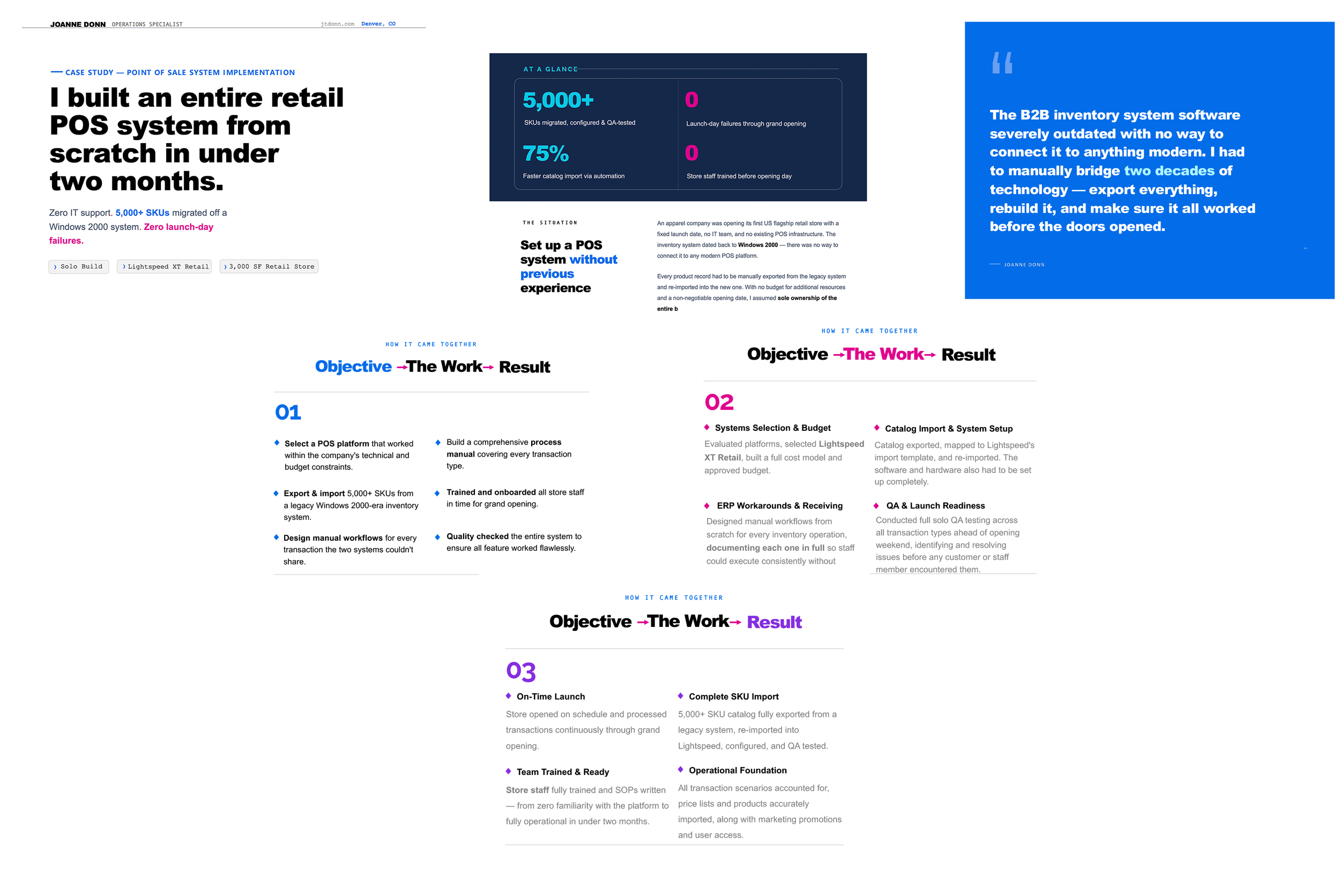
One of my case studies under my Projects page.
CAREER COACHES/RECRUITERS
I added a new set of career coaches with excellent advice about resume building. I can’t afford to hire these amazing teachers to help me, so I read everything they wrote, recorded all of the advice that I felt was relevant (for me, personally) and built a master “resume tips” document for the AI tool to pull from.
Amir Johnson
These are recruiters I really liked because the content resonated with me, not because they were “recruiters”. I wasn’t really following any career coaches before, I guess I was following the wrong people! As a result, I completely changed my resume format to something along the lines of this one:
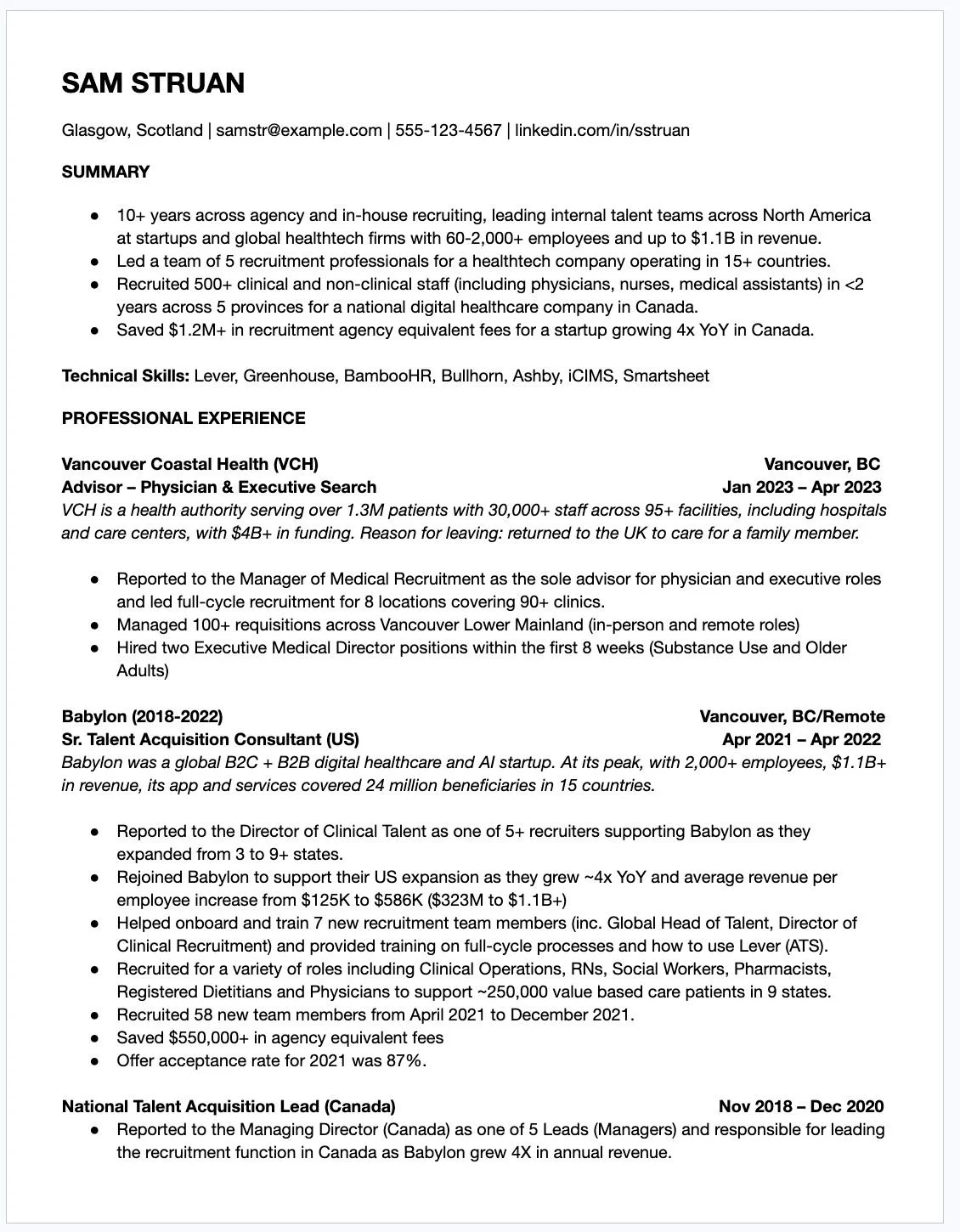
Sam Struan's Resume Template
I TRIED ANYTHING AND EVERYTHING
If a career coach or someone mentioned something they tried that worked, I tried it. Especially when it seemed like something I shouldn’t do. For example, I read one of them recommended moving your “key skills” or “tech skills” from the top of the resume to the end, those details should be built into your resume already and it takes up too much space. So I tried that.
Lis Harris called out creating CoreResumes and just tweaking minor things like the professional summary instead of making new ones all the time. So I created an “Operations & Admin Specialist” resume that I’ve been using 80% of the time and that has worked well for me.
Be open to trying different tactics, since everyone’s industry and role is so different, what works for you may not work for me and vice versa.
I hope some of this resonates with some of you, I can't say for sure any of this will work, but maybe a combination of some might help you in your situation.
GOOD LUCK, IM ROOTING FOR US!
